
Annette LeMay Burke
Portfolio 1 - Memory Building
My parents died within a few months of each other. They lived in the same house for 60 years, from the day they were married until their deaths. Once they were gone, I was left with my grief, memories of our lives together, and all their possessions, including a well-organized archive of family photos.
In my series, Memory Building, I projected those vernacular photographs onto the surfaces of my childhood home in the same locations that they were originally made and rephotographed the scene. By fusing photos from the past onto the present-day walls, I unearthed six decades of engrained memories and captured my family’s vanishing presence that once permeated our mid-century suburban home—the container for so much of my personal history.
Constructing the projected tableaus made the memories more substantive for me, provided solace for my grieving and created a new family pictorial legacy for future generations. With so many formative experiences rooted and intertwined within this building, saying goodbye to it was also saying goodbye to my parents. Even as the rooms were literally whitewashed in preparation for new owners, my memories continued to resonate within the walls.

Welcome

Rumpus Room

Chuck's Corvette

Christening Day

Dining Room Dinghy

My Playhouse

Birthday Party
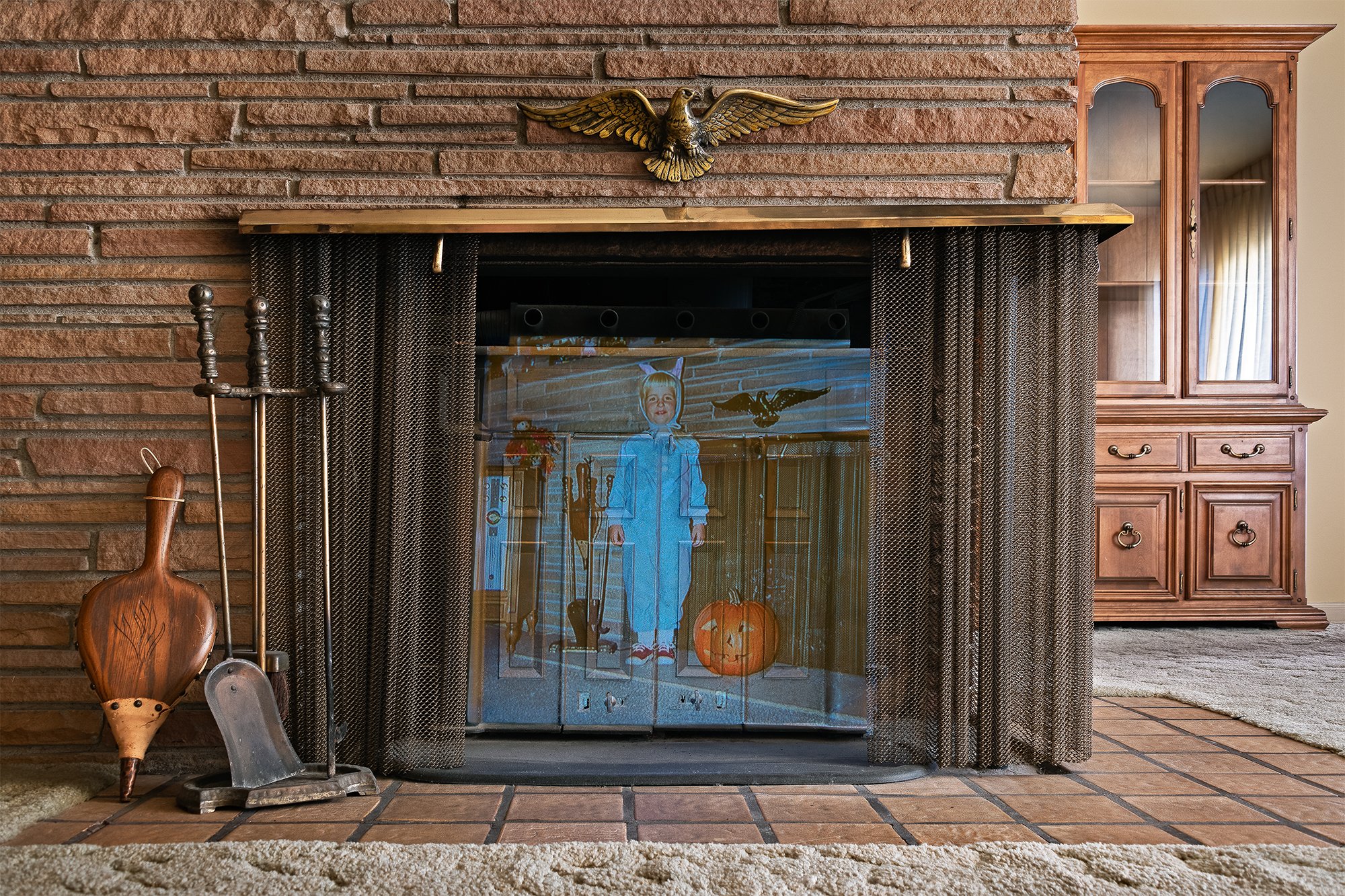
The Hearth
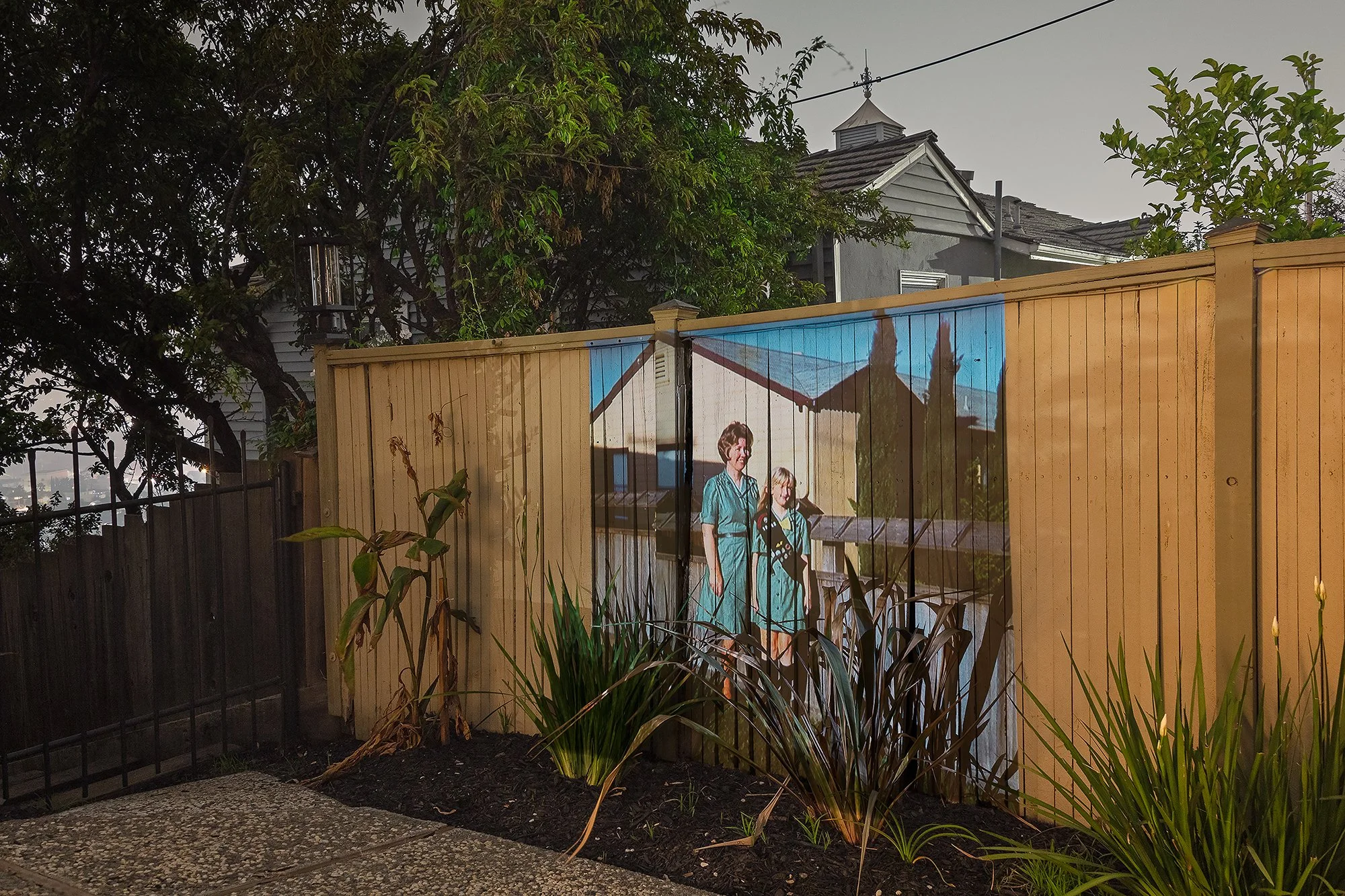
Girl Scouts

Garage Workshop

Snuggies, Remote and Buck

Baking Cookies
Portfolio 2 - Fauxliage: Disguised Cell Phone Towers of the American West
Fauxliage captures the proliferation of disguised cell phone towers across the American West. In an effort to conceal an unsightly yet essential technology, the landscape is populated with a mosaic of masquerading palms, conifers, flagpoles, crosses, and more. These structures are simulacra: water towers that hold no water, windmills that provide no power, and trees that provide no oxygen—yet all deliver five bars of service.
Beneath their camouflage lies a critical infrastructure that enables the constant flow of digital information. Cell phone cameras are now the primary tools through which we make photographs, producing vast image archives that increasingly stand in for memory. As these images move across cellular networks, the disguised towers function as concealed conduits in the construction and circulation of memory.
The shift from film cameras and physical photo albums to networked devices has been swift. I created a typological grid of cellular phones—combining photographs and physical devices—that traces changes in form, scale, and design over the past forty-five years, linking the phones in our hands to the towers embedded in the landscape.
Fauxliage considers technology’s dual role as both disruptor and unifier. As connectivity becomes ubiquitous, the work asks what is gained—and what is altered—as memory is increasingly routed, stored, and shared through the infrastructures that surround us.
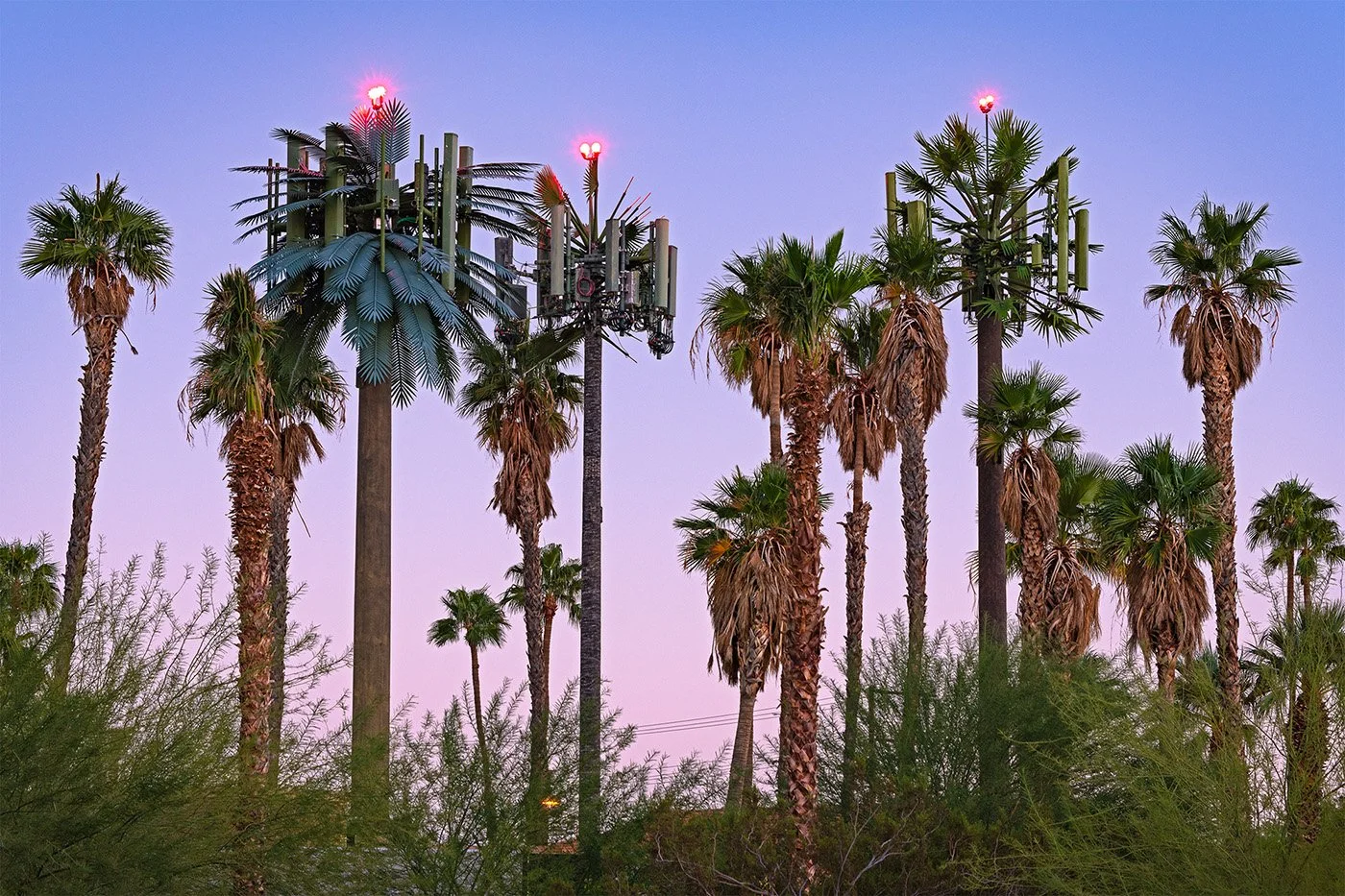
Airport Approach, Palm Springs, CA
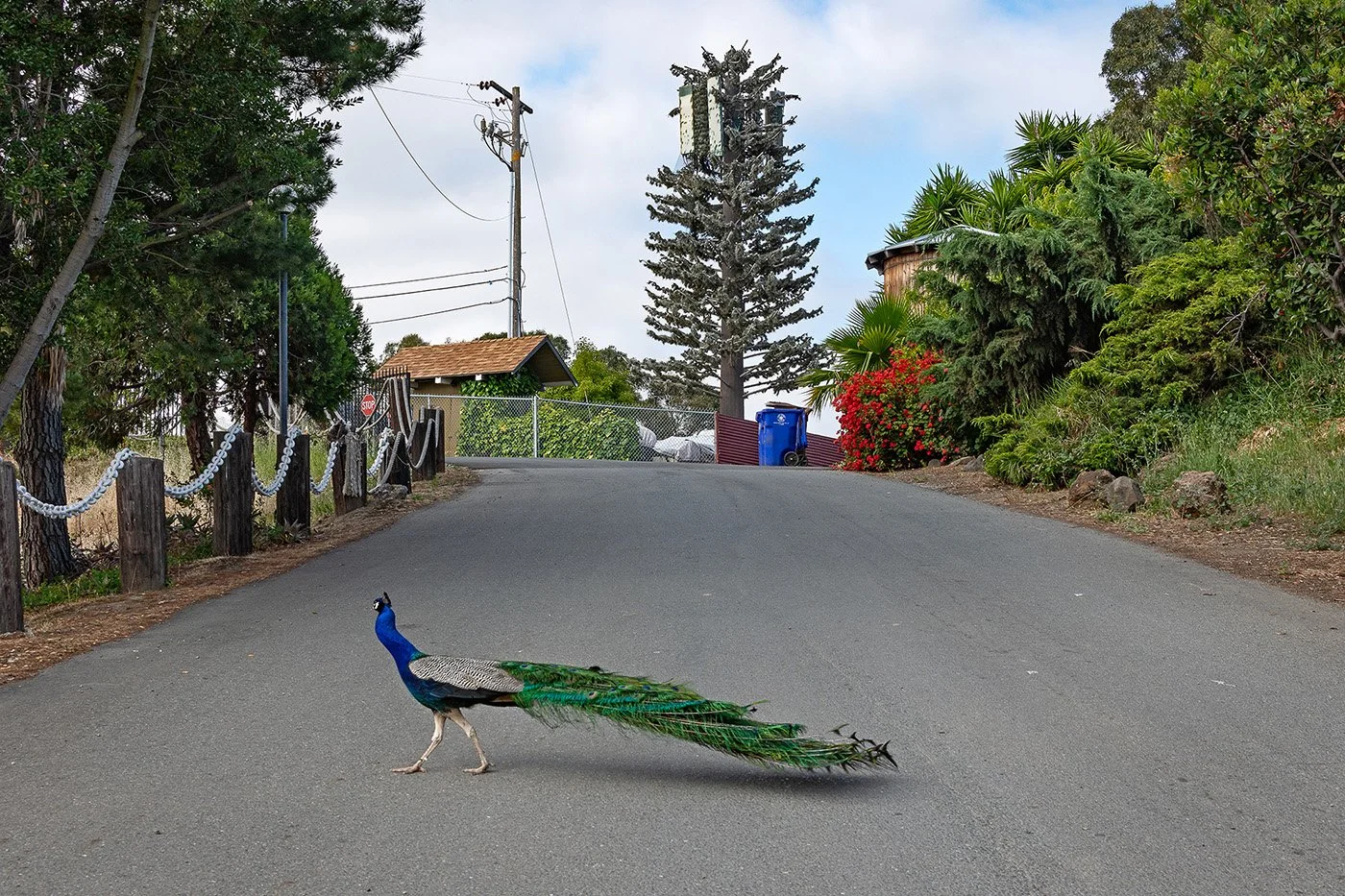
Superfluous Plumage, Rodeo, CA
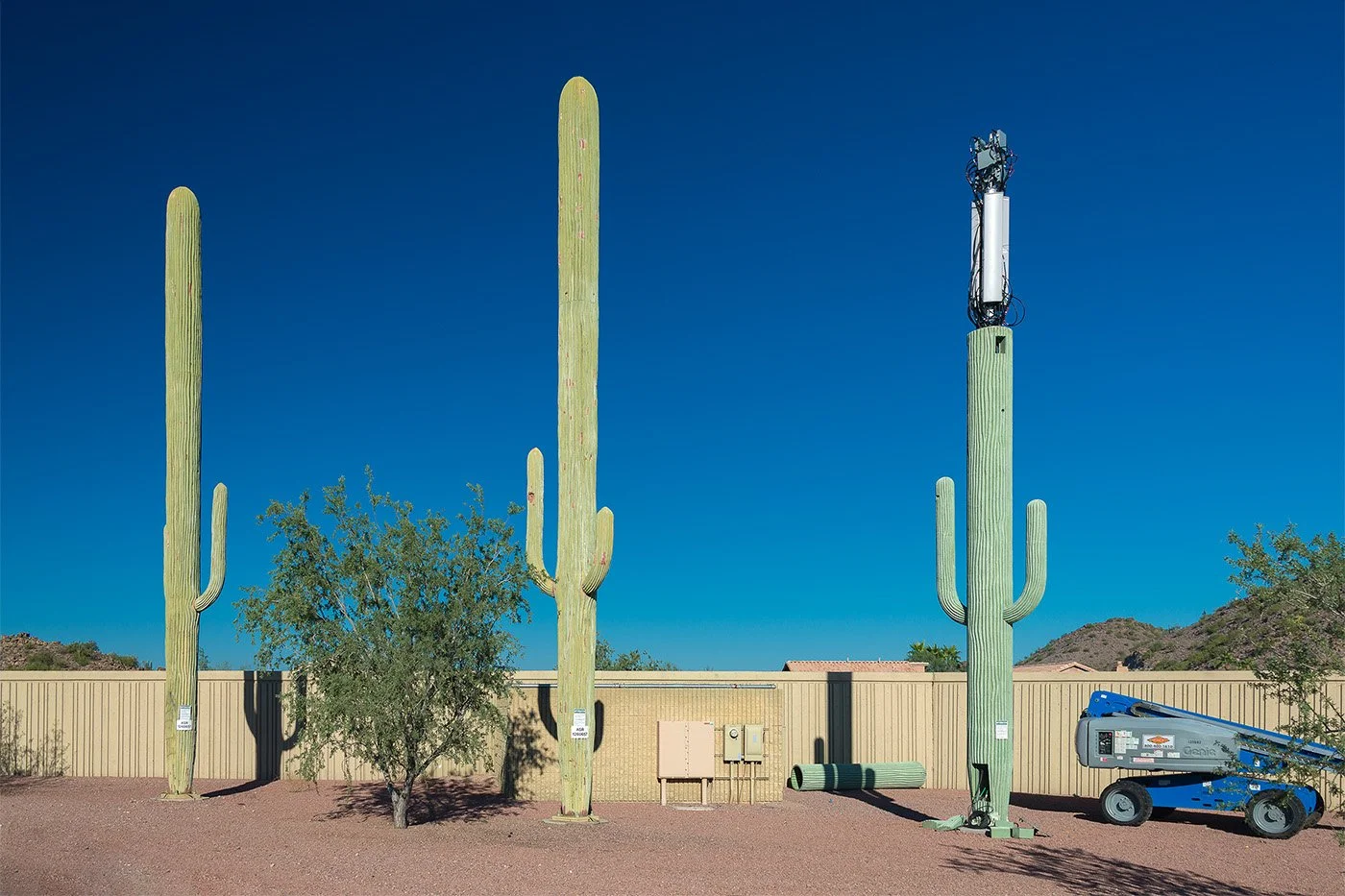
Three Saguaros, Phoenix, AZ
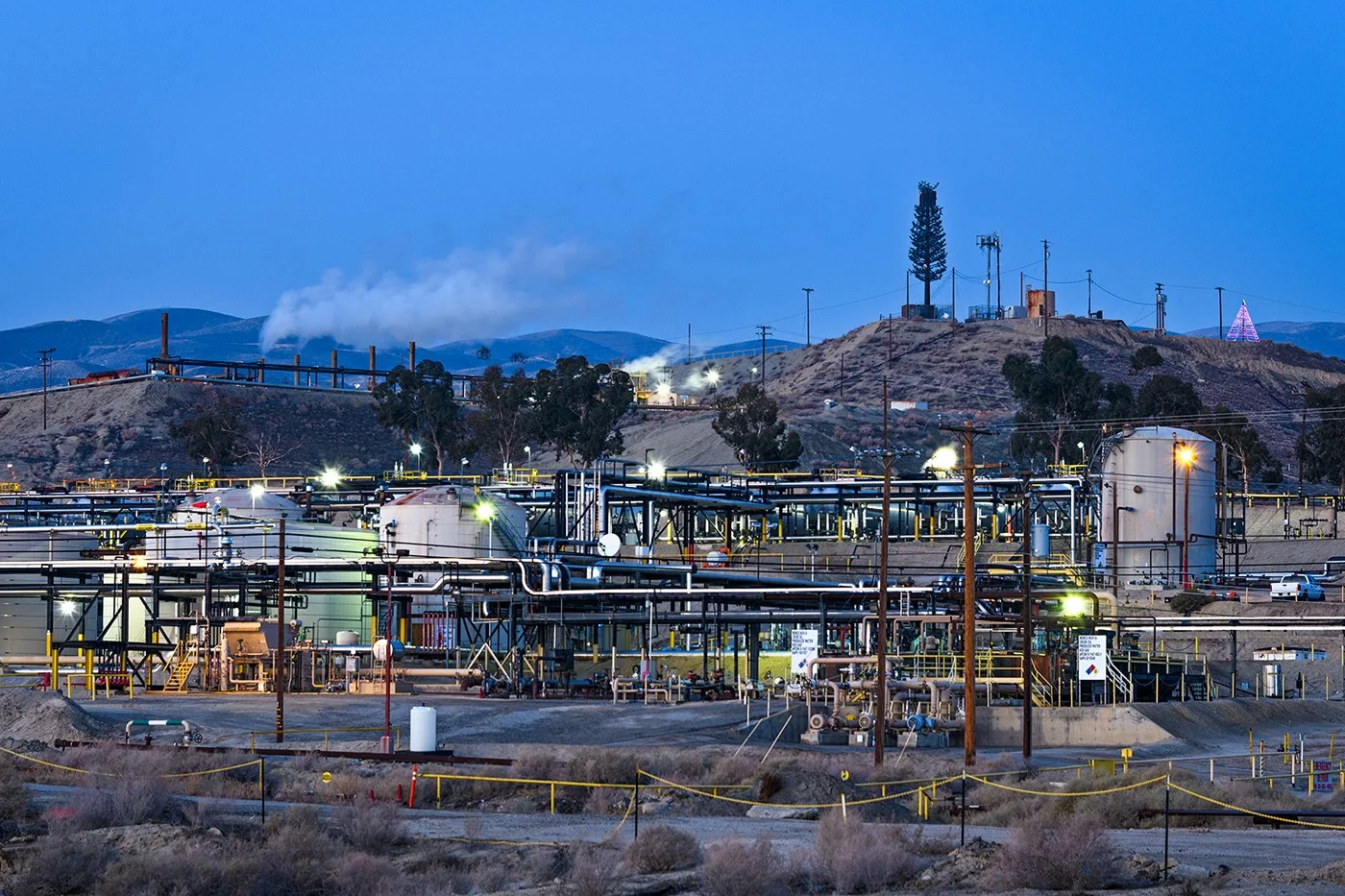
Crude Christmas, Maricopa, CA
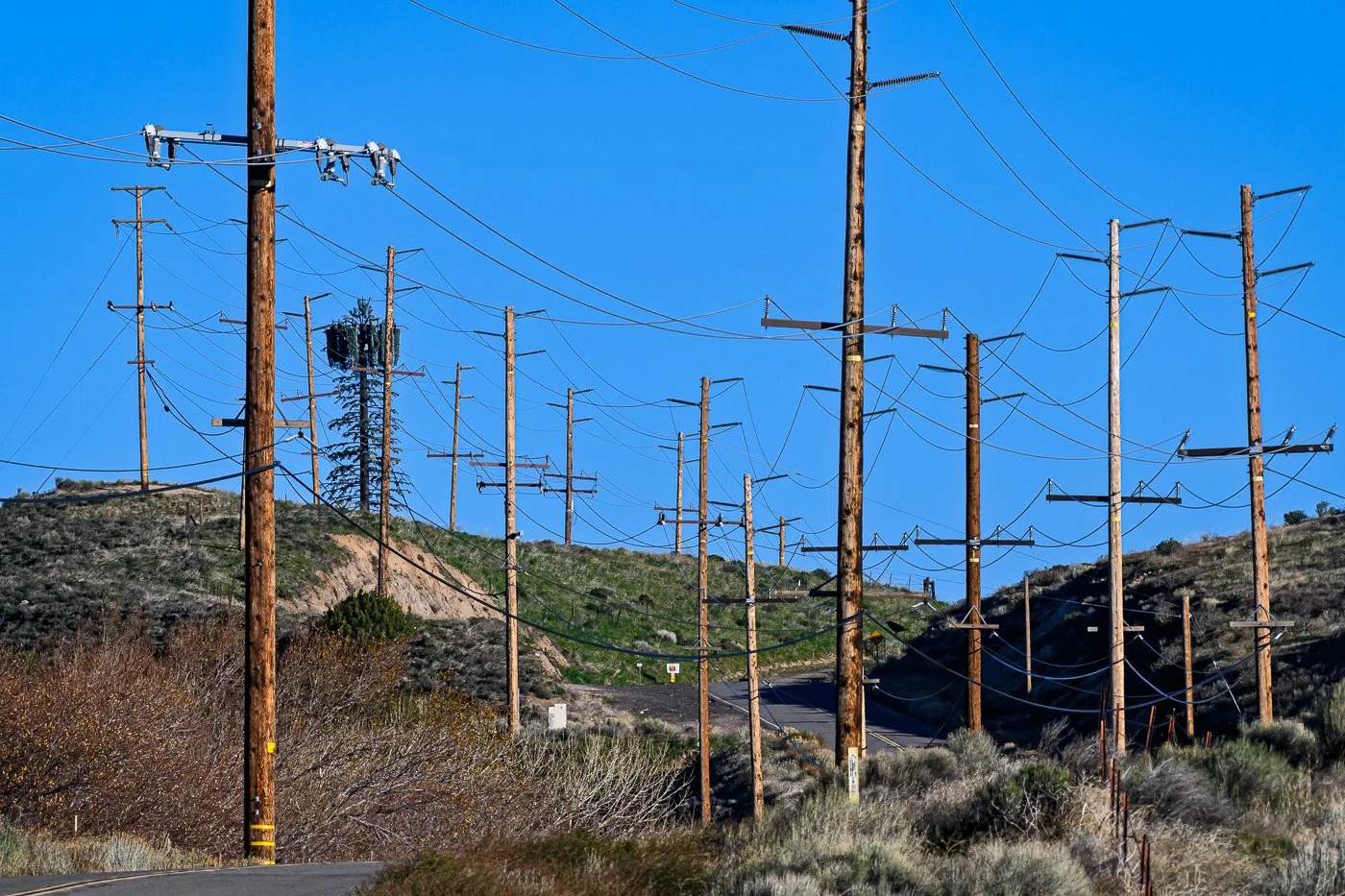
Wires Crossed, Lebec, CA
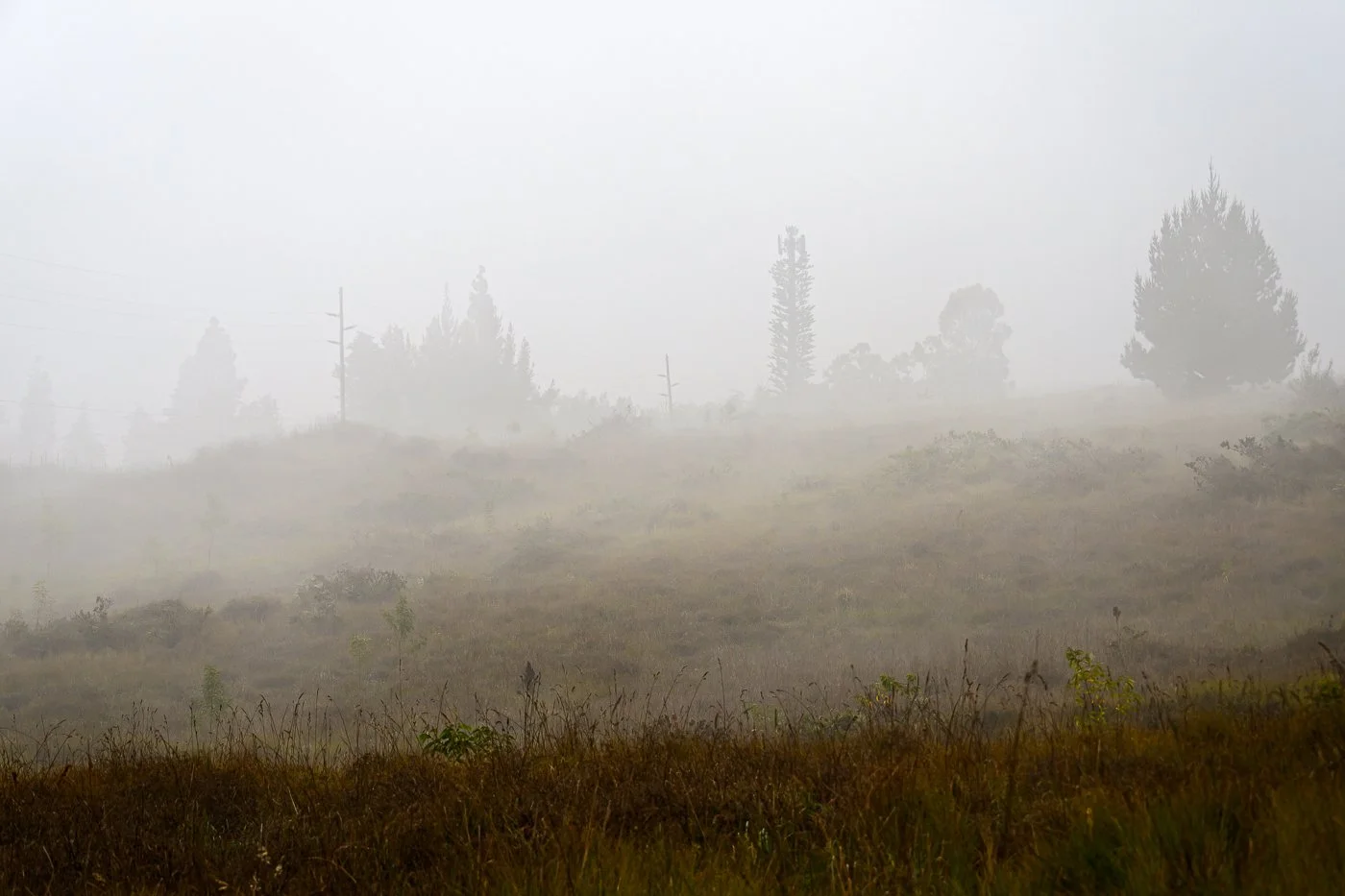
On the Flanks of Mauna Kea, Waimea, HI
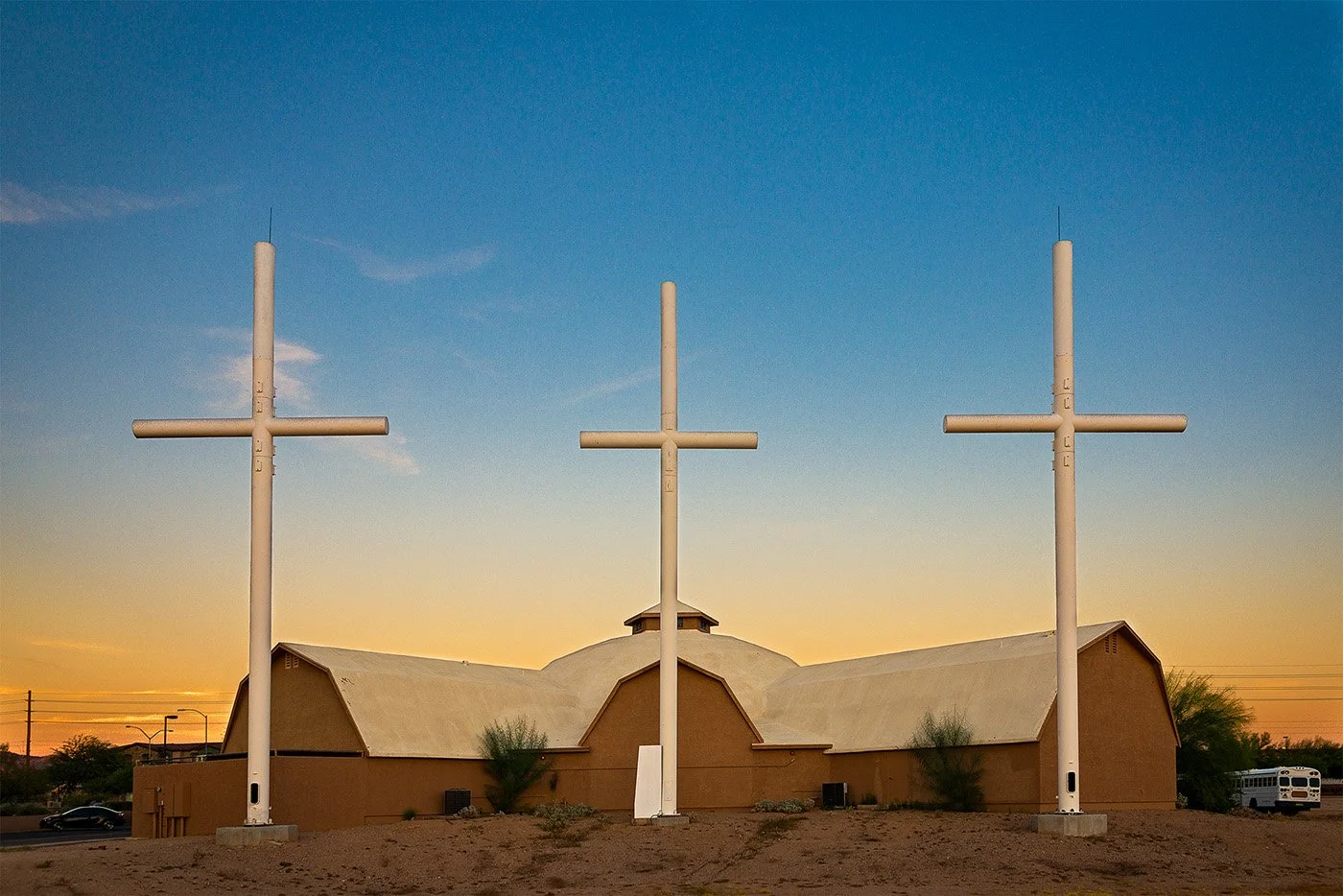
The Middle Cross, Mesa, AZ
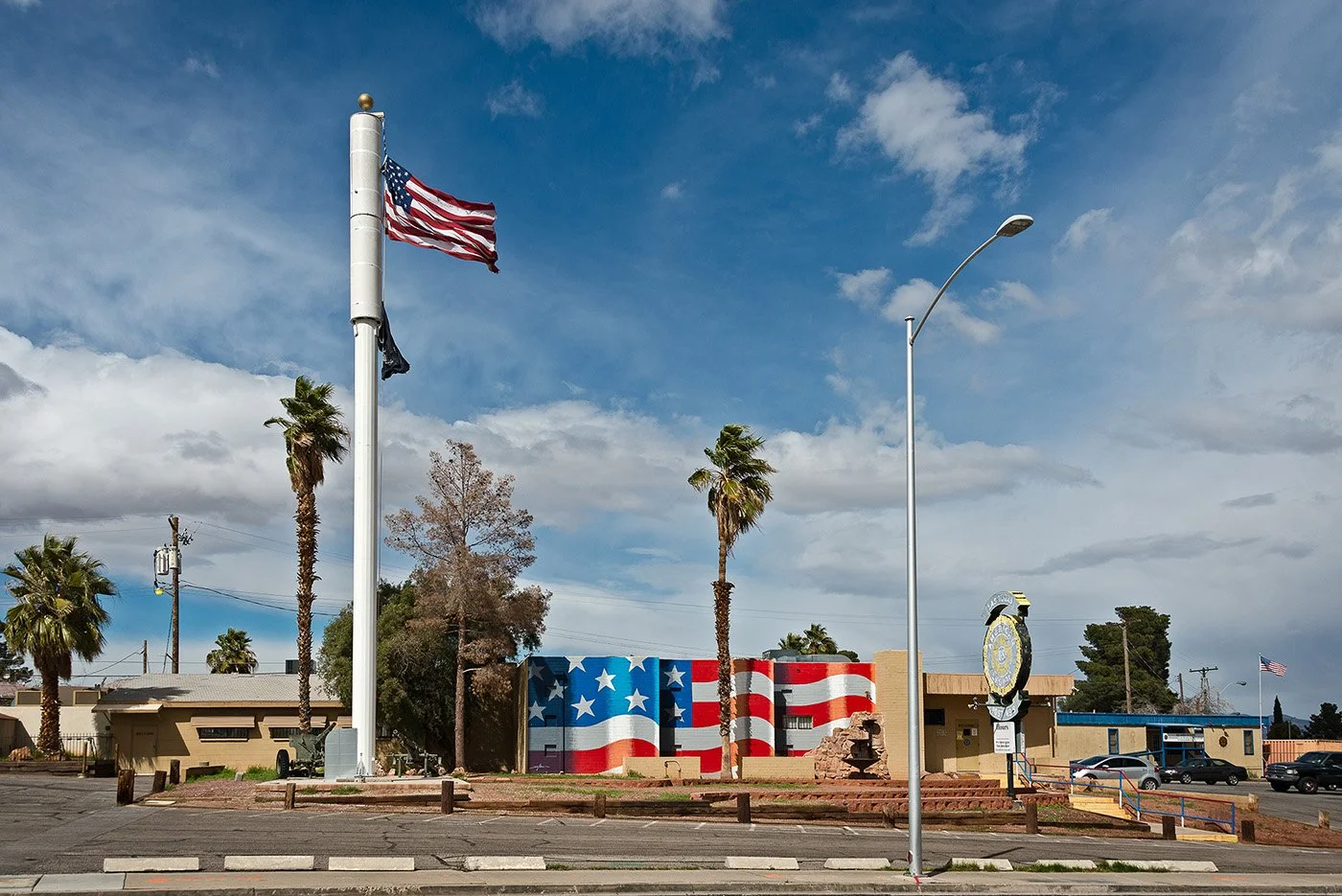
American Legion Flagpoles, Las Vegas, NV
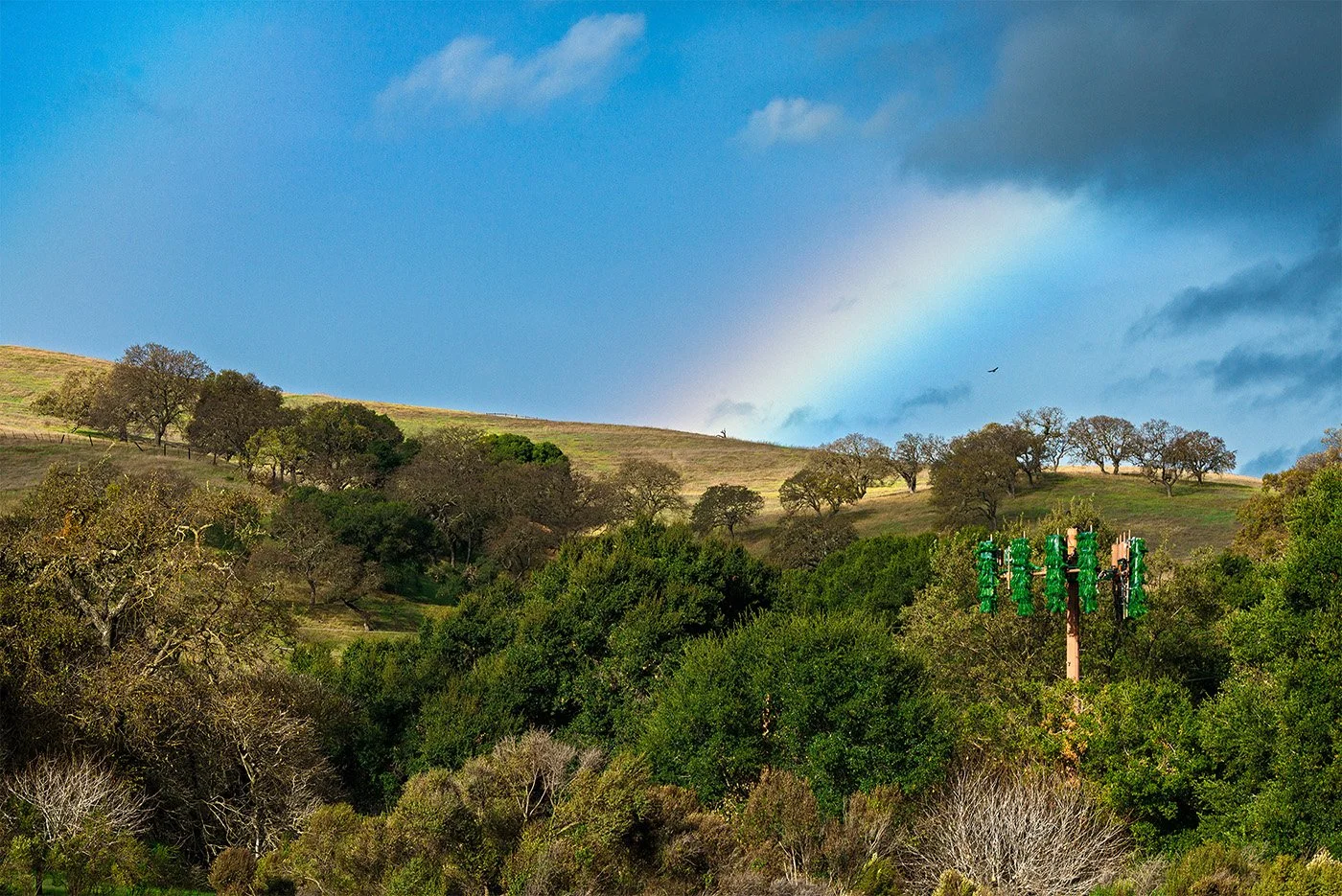
Stanford Rainbow, Palo Alto, CA
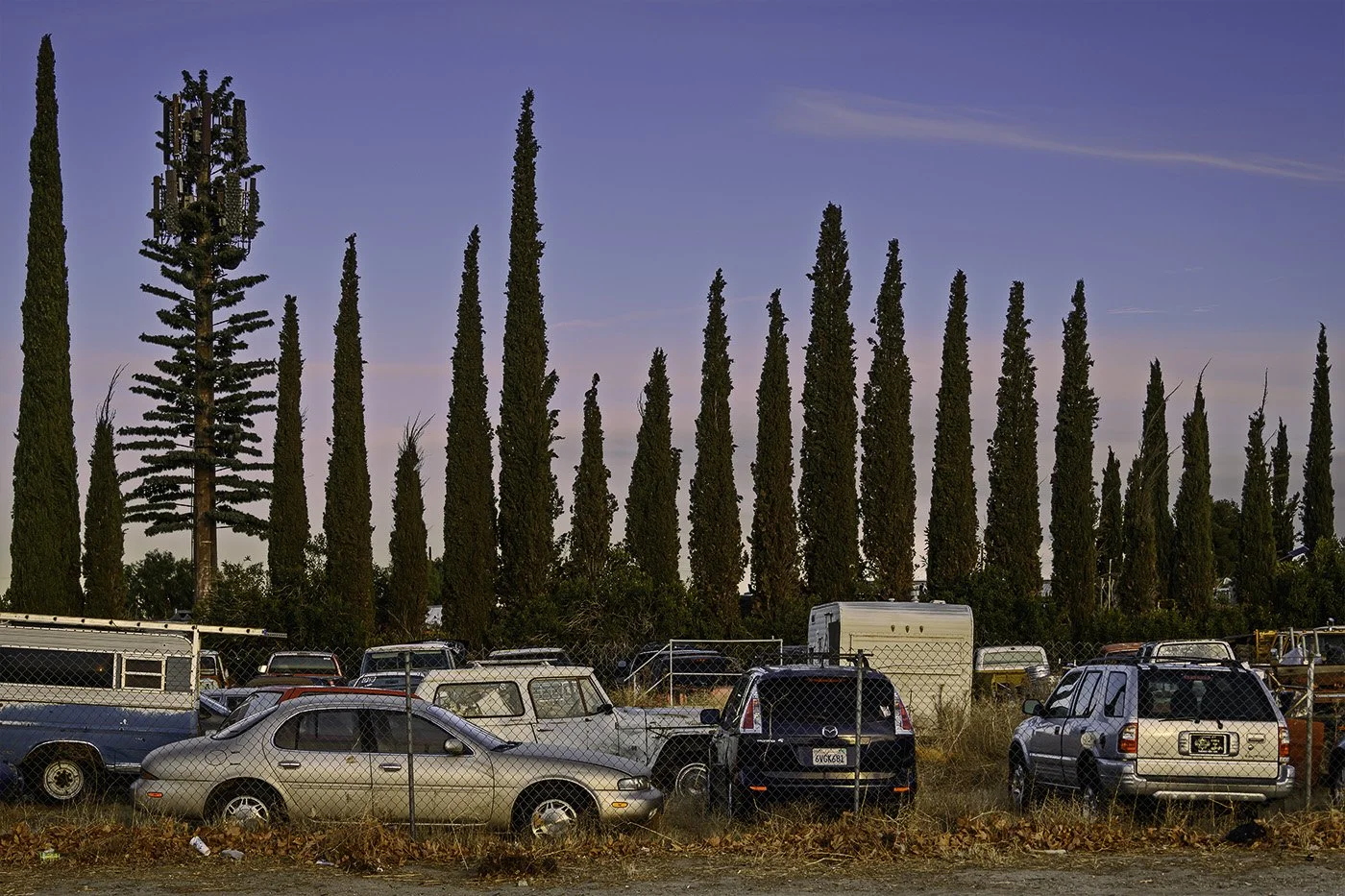
Cypress Row, Littlerock, CA
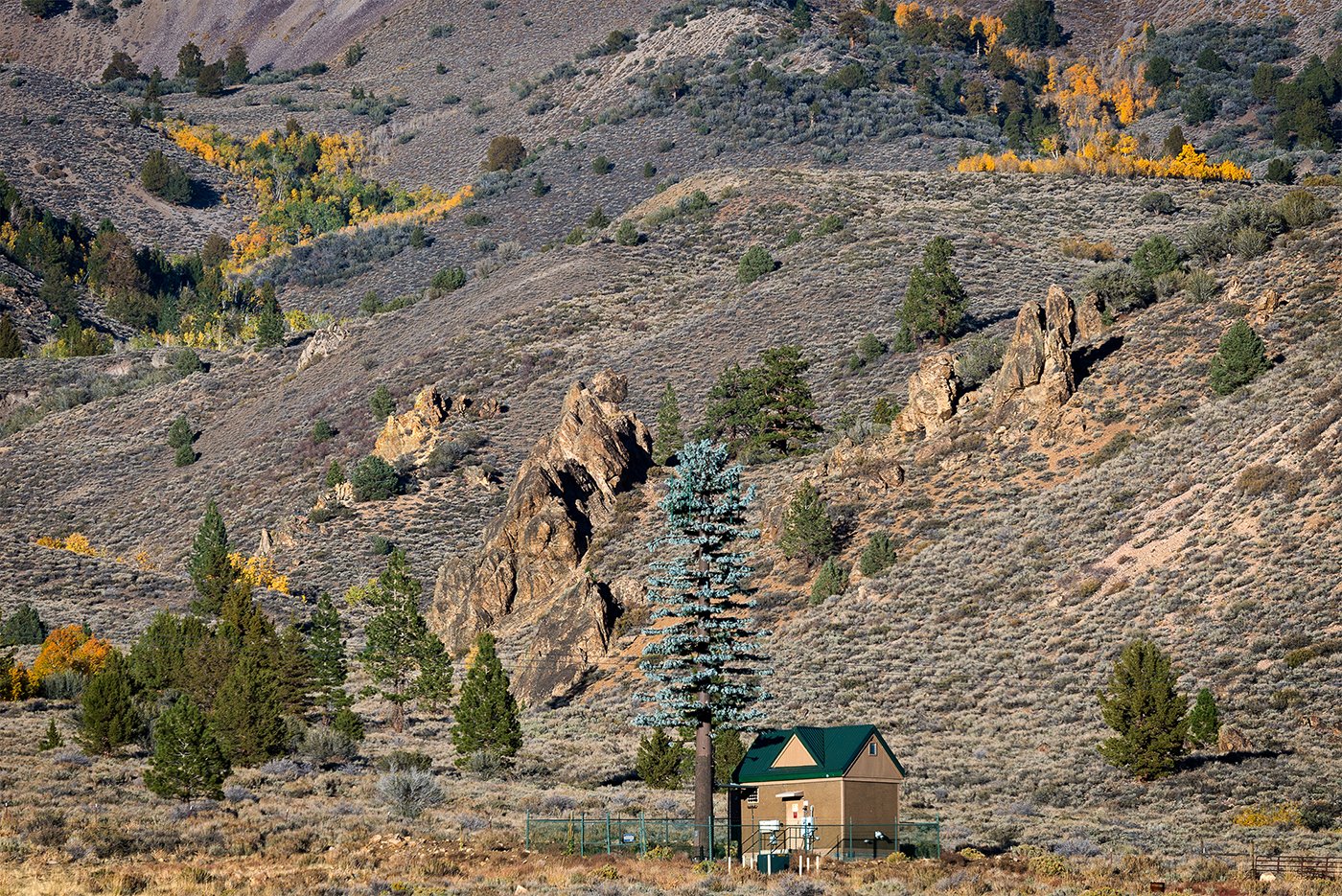
Early Autumn Color, Sonora Pass, CA
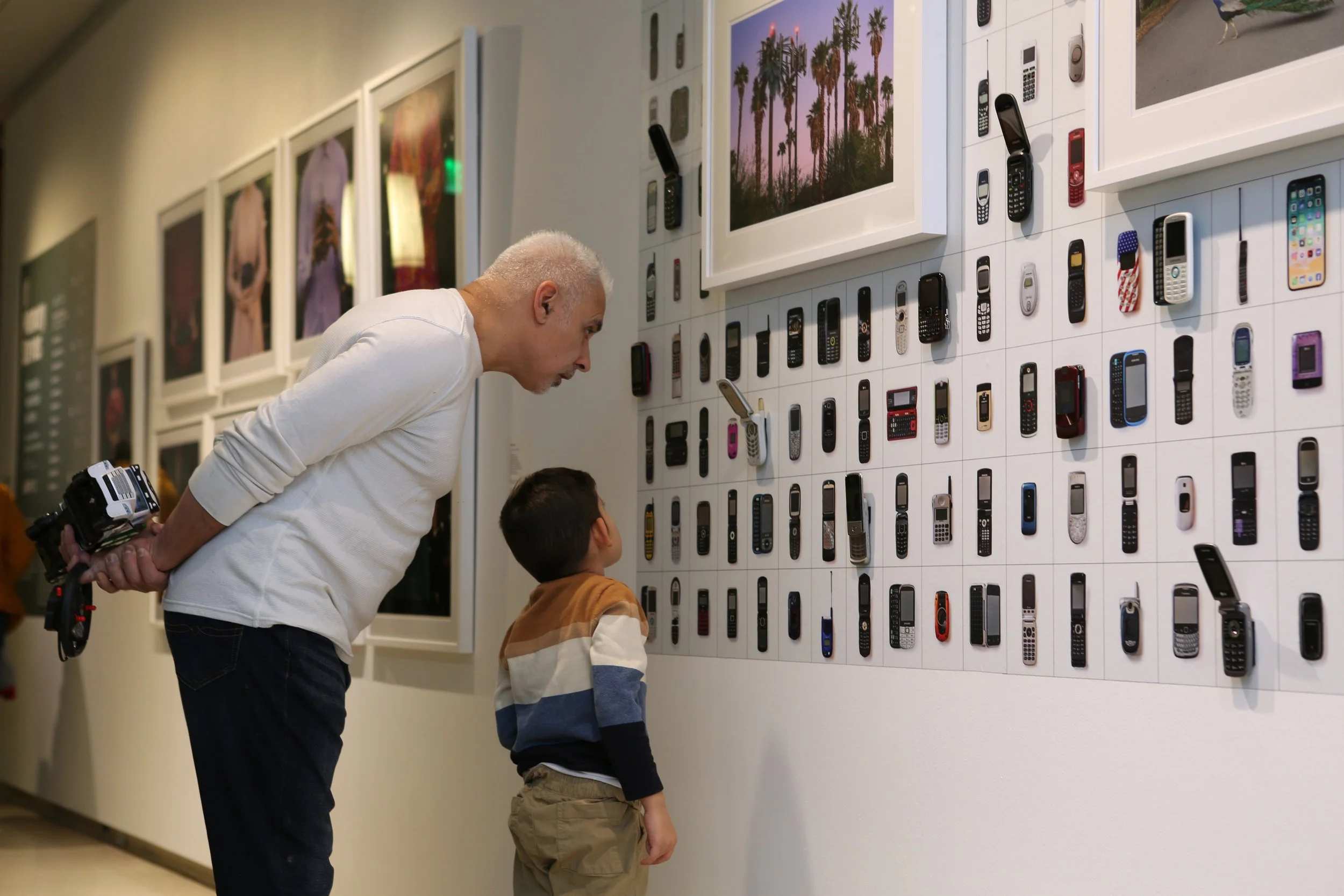
Cell Phone Typologic Grid Installation
Bio
Annette LeMay Burke is a photographic artist and Northern California native who is based in Silicon Valley. With a degree in geology from the University of California, Berkeley, she has long been attuned to the shifting contours of the western landscape. Before devoting herself to fine-art photography, she worked in the high-tech industry. The combination of those experiences allows her to bring a unique combination of scientific insight and creative vision to her photography. She is interested in how our environment changes over time and the telltale artifacts, both tangible and temporal, that are left behind. Her images explore how infrastructures — technological, geological, architectural, and domestic — reshape the land and mirror the complexities of contemporary life.
Her photographs have been featured in more than a hundred exhibitions across the globe. She was named to the Critical Mass Top 50 in 2022 and received LensCulture Critics’ Choice recognition in 2024 and 2022. Her work has appeared in The New York Times, the Los Angeles Times, The Times (UK), Boston Globe, Australian Geographic, and Il Fotografo.
Her monograph, Fauxliage: Disguised Cell Phone Towers of the American West, was published by Daylight Books in 2021.