If Memory Serves - LA Center of Photography show
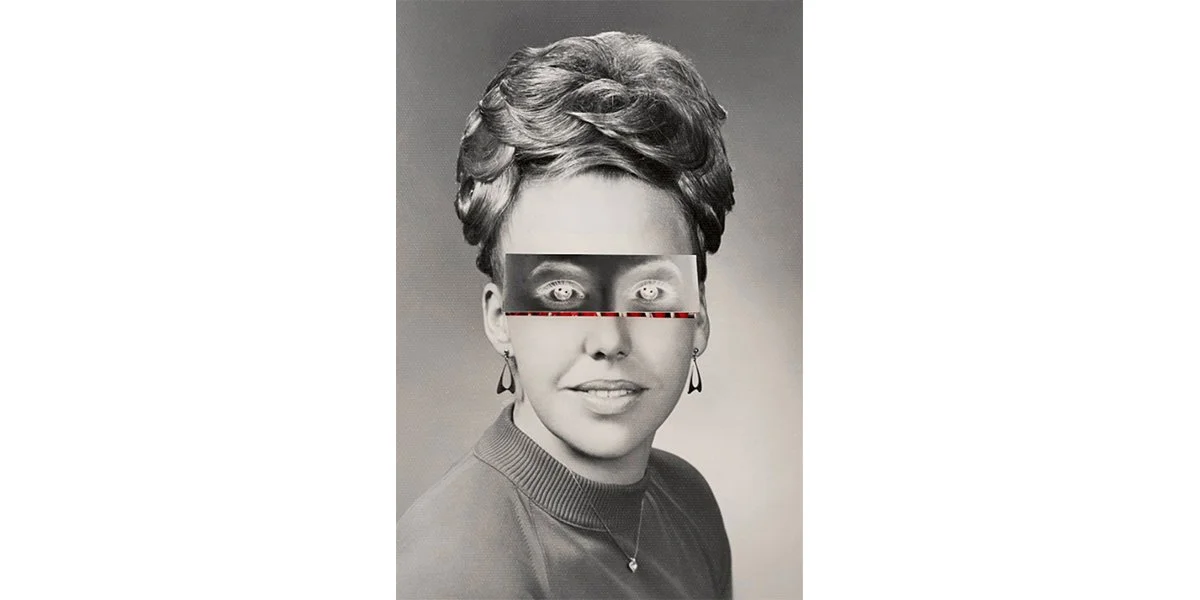
Aline Smithson’s “Football” will be on display at “If Memory Serves: Photography, Recollections and Vision,” opening Saturday, Dec. 16, at the Brand Library and Art Center.
Los Angeles Downtown News
Memory and photography are inextricably linked, bearing witness to life’s most significant moments: birth, death and all that transpires between. Throughout her career, teacher and photographer Aline Smithson has chronicled how photographs move through time — conveying memory, history and being — and shift based on ever-changing technology.
“If Memory Serves: Photography, Recollections and Vision,” produced by the Los Angeles Center of Photography, honors Smithson’s contributions to photography and her work as a teacher and mentor. The exhibit will open with a reception on Saturday, Dec. 16, at the Brand Library and Art Center in Glendale and continue through Saturday, Feb. 24.
Filling out the 5,000 square-foot gallery, Smithson’s work will stand alongside collections by 12 of her former students and collaborators: Safi Alia Shabaik, Elizabeth Bailey, Dena Elisabeth Eber, Sarah Hadley, Diane Hemingway, Rohina Hoffman, Susan Lapides, Annette LeMay Burke, Annie Omens, Lori Ordover, Aurora Wilder Collective (Jennifer Pritchard in collaboration with Patrick Corrigan and DALL-E), Aline Smithson and Rosalie Rosenthal.
“Since the beginning of my photography career, I’ve been looking at how family photos move through time,” Smithson said. “Even in the ’80s, I began to find photographs on the ground and started thinking about how our legacies are increasingly difficult to keep.”
Since the early aughts, when digital photography began gaining popularity, photos and memories have slowly migrated from physical images and albums to the ether of the net. While digitization may seem like an indelible canonization, files corrupt and hard drives fail, eradicating years of photo memory. Smithson’s work documents the decline of the photo album and underscores the need to preserve family histories.
“The ‘corruption,’ the literal decomposition of digital files is its own kind of fugue state — a loss of ‘consciousness’ with wide-ranging implications and effects: the erasure of histories, writ large and those quieter histories of the self and family,” Smithson explained.
Smithson’s portion of the exhibit, titled “The Ephemeral Archive,” consists of dozens of photo albums and thousands of photographs untethered from their families, collected from across the country. Her show will feature six bodies of work, including three installations and Smithson’s first foray into filmmaking. As the name suggests, the works examine the transience of technology and its effect on collective family memory.
“This show allowed me to take this concept that we’re losing our physical histories and expand and create six bodies of work around that idea,” Smithson explained.
One installation will feature a wall of family photos chronicling life events, great and small. The piece touches on the “ubiquitousness of what we put in the photo album — birthday parties, graduations, weddings — what we choose to document and save,” Smithson said.
The show also features Smithson’s first short film, which explores the burden of carrying memories through time. Another work features a found photo album, with only captions remaining, inviting viewers to imagine what the pictures might have been. Captions in physical photo albums are often hyper-specific, including notes, dates and anecdotes, providing invaluable historical context. Digital photos are often scattered across various devices and platforms without context.
“As memories fade and individuals move on, the meaning behind these images can be lost. The stories that once accompanied family photos may be forgotten, leaving future generations with incomplete narratives or archives lost to apathy, technology or time,” Smithson explained.
Since 2001, Smithson has worked as a teacher and mentor at LACP. Many of the participating artists in the show came out of Smithson’s year-long portfolio master class in 2021 during the pandemic.
“We all wanted to be connected,” Smithson said. “Everyone in the group is a true artist. They’re not like student photographers. Everyone got along really well and brought wonderful attributes to the group.”
By the end of the class, Smithson realized each person’s work, including her then-current projects, touched on the same theme: memory. Inspired by this synchronicity, the group went on to collaborate on a traveling exhibition with the same focus.
Curated by LACP Executive Director Rotem Rozental, “If Memory Serves” is the newest iteration of the group’s previous work, including new works and two new artists, Hoffman and Shabaik. The show is entirely women-led and features artists from LA and nationwide.
“I think the show is going to touch people that are not necessarily in the art world. … It is about family, and it’s about archives, personal things,” Smithson said. “It’s an amazing opportunity, and I’m so grateful to LACP, and I’m so excited to be showing with all these wonderful artists and showing so much work at once.”
Opening for “If Memory Serves: Photography, Recollections and Vision”
WHEN: 6 to 9 p.m. Saturday, Dec. 16
WHERE: Brand Library and Art Center, 1601 W. Mountain Street, Glendale
COST: Free admission
INFO: www.lacphoto.org